The Mount Lowe Railway plays a major role in Southern California’s remarkable mountain tourism. What really happened to the “Railway to the Clouds”? This article delves into its ruins today, the stories that linger around it, and what visitors can explore nearby.
High above Altadena, California, the ruins of the railway still cling to the San Gabriel Mountains like the remains of a grand dream. Opened in 1893, the railway once carried visitors from the foothills into a mountain resort world. People enjoyed the splendid features and scenery, which included some of the following.
- electric cars,
- dramatic cliffside views,
- luxury hotels,
- an observatory,
- and a glowing mountaintop complex known as the “White City in the Sky.”
On any given ay over 1,000 people were estimated to make this unbelievable journey. Some accounts record that during its absolute busiest year in 1921, the railway carried 160,930 passengers. This averages out to roughly 13,410 passengers per month.
Though the railway has been gone for generations, its stone foundations, machinery, trails, and legends continue to attract hikers, history lovers, and curious travelers.
How Did the Mount Lowe Railway Begin?

The Mount Lowe Railway was the vision of Professor Thaddeus S. C. Lowe, an inventor, entrepreneur, Civil War balloonist, and engineer David J. Macpherson. Their goal was bold and ambitious. Few thought it possible to build a scenic electric mountain railway that would lift tourists from the Los Angeles basin into the rugged San Gabriel Mountains.
The line opened on July 4, 1893, beginning at Altadena and eventually extending nearly seven miles through steep canyons, sharp curves, and exposed mountain ledges.
The trip was part transportation and part spectacle. Passengers could ride electric trolleys to Rubio Canyon, transfer to the dramatic Great Incline cable railway, and continue toward Echo Mountain and later Alpine Tavern.
At Echo Mountain stood the 70-room Echo Mountain House, along with a chalet, observatory, casino or social hall, zoo, dance hall, shops, fountains, and other attractions. The mountaintop resort was painted white and illuminated at night, making it visible from miles away.
Despite its popularity, the railway faced constant hardship. The Panic of 1893 weakened Lowe’s finances almost immediately, and by the late 1890s he had lost control of the enterprise.
Fires, windstorms, floods, landslides, and economic pressures repeatedly damaged the railway and resort.
- Echo Mountain House burned in 1900,
- Other Echo Mountain buildings were destroyed by fire in 1905,
- Rubio Pavilion was damaged by floods and rockslides, and
- Alpine Tavern burned in 1936.
The railway was officially abandoned in 1938.
What Goes on at the Mount Lowe Railway Today?

Today, the Mount Lowe Railway survives as a historic hiking destination rather than a working railroad. Visitors can reach Echo Mountain by trails such as the Sam Merrill Trail from the Cobb Estate area in Altadena.
Along the route and at the summit, hikers can find interpretive markers, stone walls, foundations, sections of the old railway grade, machinery remnants, and the large cable wheel associated with the incline system.
The area is now valued for both recreation and preservation.
- Echo Mountain offers sweeping views across Pasadena, the San Gabriel Valley, downtown Los Angeles, and on clear days toward the Pacific coast.
- The ruins are open-air relics, so the experience is less like visiting a museum and more like walking through the footprint of a vanished resort.
- Visitors can stay on designated trails, take photos of historic remains, find scarce water, and tour varying mountain landscapes.
Are There Myths and Legends Related to this Railway

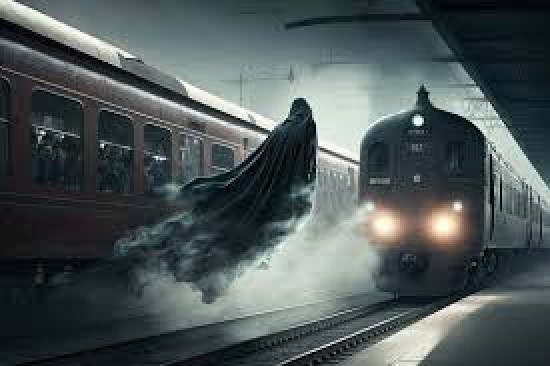
Like many abandoned mountain sites, Mount Lowe has gathered stories that blend history, mystery, and imagination. Some visitors describe the ruins of Echo Mountain House as having a haunted atmosphere, especially because of the fires that destroyed the once-grand “White City in the Sky.”
Nearby Cobb Estate, often used as a trailhead for Echo Mountain hikes, has its own reputation in local folklore as part of Altadena’s so-called “Haunted Forest.” These stories are best understood as local legends rather than verified historical facts.
Another persistent legend is that the railway was an impossible or almost unreal engineering feat. Sometimes described as an “eighth wonder” of its day.
While that phrase is more promotional than official, it reflects the genuine astonishment early visitors felt when electric cars climbed steep grades, crossed narrow ledges, and delivered passengers to hotels high above the city. The line’s nickname, “Railway in the Clouds,” also helped create an aura of romance that still surrounds the site.
Other lore centers on the ruins themselves:
- Hikers sometimes claim to hear echoes,
- imagine vanished hotel lights on the ridge,
- or picture the incline cars climbing through fog.
These tales endure because the site is unusually evocative. A visitor can still stand beside old foundations and machinery while looking over the modern city below. This makes it easy to feel that the railway’s past is only partly gone.
Nearby Tourist Attractions

- Echo Mountain Ruins: The main destination for many visitors, with remains of the resort complex, railway equipment, foundations, and interpretive signs.
- Cobb Estate: A popular access point for the Sam Merrill Trail and a site with its own local folklore and historical associations.
- Sam Merrill Trail: A well-known hiking route from Altadena to Echo Mountain, offering views, chaparral landscapes, and access to railway ruins.
- Rubio Canyon: Historically connected to the lower portion of the railway and the Great Incline, with rugged canyon scenery and remnants associated with the old route.
- Mount Lowe Railway Trail: Sections of the former railway grade can be explored by hikers seeking a longer historical route through the mountains.
- Alpine Tavern Site: Farther up the mountain route, this area preserves the memory of the once-popular tavern and resort stop destroyed by fire.
- Altadena and Pasadena: Nearby communities offer restaurants, historic neighborhoods, gardens, museums, and easy access to other San Gabriel Mountain trailheads.
- Angeles National Forest: The broader forest area provides hiking, scenic drives, wildlife viewing, and mountain recreation close to greater Los Angeles.
Why Mount Lowe Railway Still Matters

The Mount Lowe Railway matters because it captures a turning point in Southern California history. It represents the region’s early enthusiasm for technology, tourism, real estate development, and mountain recreation.
It also reminds visitors that even the most ambitious human projects are vulnerable to fire, flood, unstable terrain, and financial pressure.
What remains today is not a complete railroad, but a powerful landscape of memory. Rails turned into trails, hotels reduced to foundations, and a once-famous destination transformed into one of the Los Angeles area’s most atmospheric historic hikes.
Visitor Tips
- Start early in warmer months, as the trail can be exposed and hot.
- Bring plenty of water, sun protection, and sturdy footwear.
- Check current trail and forest conditions before visiting, especially after storms or wildfire activity.
- Do not remove artifacts or disturb ruins; the site is part of a shared historical landscape.
- Allow extra time to read interpretive signs and explore safely.
Leave a Reply